
January 15, 2026
How to Clean Hockey Gear: The Complete 2026 Cleaning & Maintenance Guide
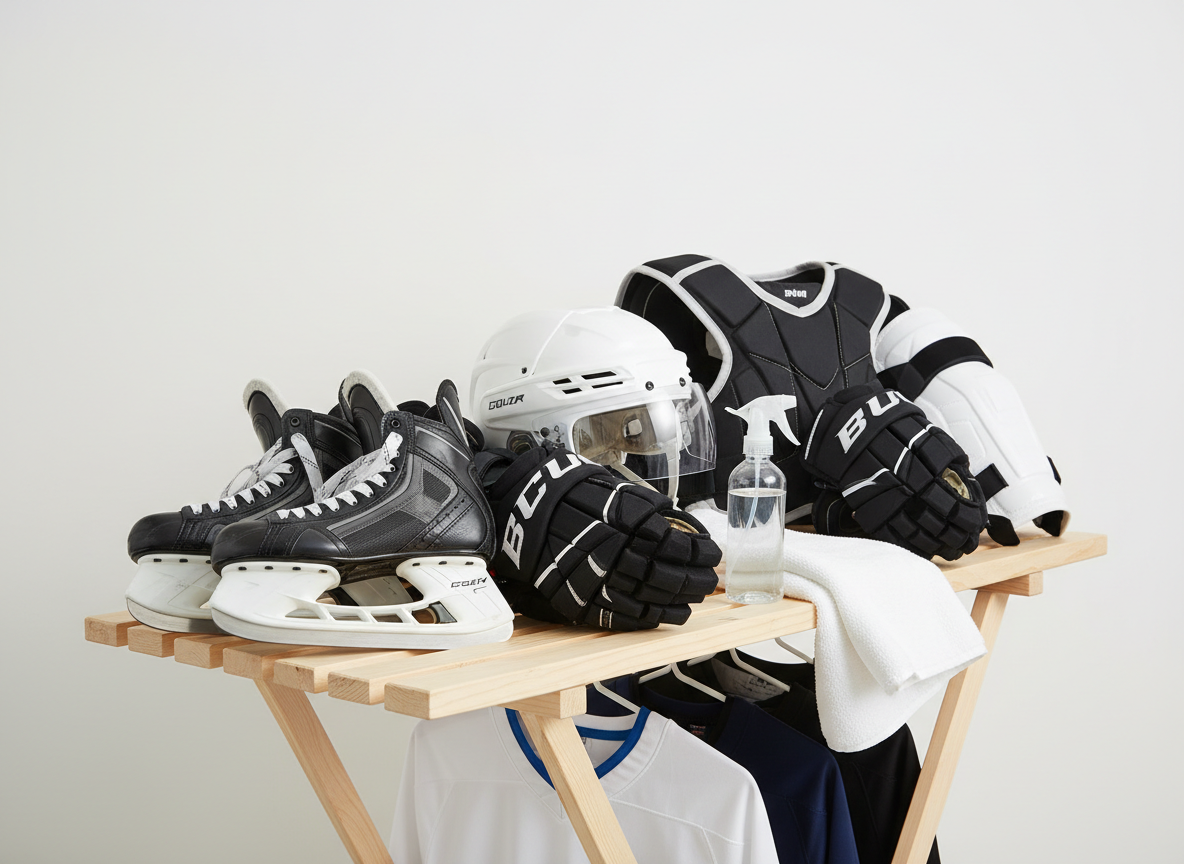
How to clean hockey gear properly is one of the most important skills hockey parents and players can learn. Between sweat, ice time, locker rooms, car rides, and weekend tournaments, hockey equipment does not take long to smell, break down, or feel worn out.
Many families assume this is unavoidable and replace gear every season. In reality, learning how to clean hockey gear the right way can extend the life of equipment by months or even years, while also keeping players healthier and reducing unnecessary costs.
This complete guide explains exactly how to clean hockey gear in 2026, using safe, proven methods that work for Canadian hockey families.
Why Knowing How to Clean Hockey Gear Matters
Hockey equipment is designed for protection, not hygiene. Padding absorbs sweat, and if moisture stays trapped, bacteria grow quickly. Over time, this leads to strong odors, stiff padding, and faster material breakdown.
Understanding how to clean hockey gear correctly helps:
-
Reduce bacteria and odor buildup
-
Keep padding flexible and protective
-
Extend the lifespan of expensive equipment
-
Avoid replacing gear earlier than necessary
For families managing the high cost of hockey in Canada, proper cleaning and maintenance are simple but powerful money-saving habits.
How Often Should You Clean Hockey Gear?
You do not need an overly complicated routine.
After every skate:
Dry all hockey gear completely.
Every one to two weeks:
Light cleaning of gloves, helmets, and skates.
Two to three times per season:
Deep cleaning of pads and protective equipment.
Competitive players and goalies may need more frequent cleaning due to heavier ice time and increased sweat.
How to Clean Hockey Gear Starts With Proper Drying
Before any soap or cleaner is used, it is essential to understand that how to clean hockey gear always starts with drying. Drying is the single most important step in preventing bacteria and odor.
Best drying practices include:
-
Opening the hockey bag fully after every use
-
Hanging or spreading equipment to allow airflow
-
Using a fan or dehumidifier when possible
-
Never leaving gear in a closed bag or car overnight
Health Canada explains that bacteria thrive in moist environments, which is why proper drying and ventilation are essential for limiting bacterial buildup on sports equipment.
Source: https://www.canada.ca/en/health-canada/services/healthy-living.html
How to Clean Hockey Gloves Properly
Hockey gloves absorb more sweat than almost any other piece of equipment.
For regular cleaning:
Spray the inside of the gloves with a sports equipment disinfectant and wipe the palms with a damp cloth. Allow them to air dry fully.
For deep cleaning:
Soak gloves in cold water with a small amount of mild detergent. Gently squeeze the padding without twisting. Rinse thoroughly and air dry with the palms facing down.
Avoid using dryers or heaters, as heat damages glove palms and shortens their lifespan.
How to Clean Hockey Gear Pads and Protective Equipment
Shoulder pads, elbow pads, shin pads, and hockey pants trap sweat deep inside foam layers.
To clean them safely:
-
Fill a bathtub or large bin with cold water and mild detergent
-
Soak equipment for 30 to 45 minutes
-
Rinse until the water runs clear
-
Allow everything to air dry for at least 24 hours
Fabric softeners should be avoided because they leave residue that traps odor-causing bacteria.
How to Clean Hockey Skates Without Causing Damage
Skates require frequent care, but they should never be soaked in water.
After every skate:
-
Wipe blades dry immediately
-
Remove footbeds
-
Open the tongue fully to allow airflow
Weekly maintenance:
-
Wipe the inside of the boot with a damp cloth
-
Use baking soda or a skate deodorizer if needed
Always store skates with soft blade covers, not hard guards. Soaking skates can weaken adhesives and damage the boot structure.
If skates are beyond repair, you can browse current hockey skate deals here:
https://hockeydeals.ca/deal-listings/
How to Clean Hockey Helmets and Cages
Helmets sit directly against the skin and should be cleaned regularly.
Wipe the helmet shell and interior padding with warm water and mild soap. Disinfect the padding and allow it to air dry completely before reassembling. Cages can be cleaned separately with soap and water.
If padding becomes stiff or continues to smell after cleaning, replacement may be necessary.
How to Clean Hockey Gear for Goalies
Goalie equipment holds more moisture than player gear and requires extra attention.
Goalie pads, gloves, and blockers should be dried immediately after every skate. Fans help move air through thick padding. Deep clean goalie gear once or twice per season using hand washing only.
Machine washing or drying goalie gear can permanently damage padding and structure.
You can find current goalie gear deals here:
https://hockeydeals.ca/deal-listings/
How to Remove Hockey Gear Odor Permanently
Sprays that only mask smells are not effective long-term. The goal is to eliminate bacteria.
Effective odor-control methods include:
-
Diluted vinegar and water sprays
-
Enzyme-based sports cleaners
-
Sunlight exposure when weather allows
-
Baking soda for skates and bags
Consistent drying after every use remains the most effective solution.
When Cleaning Hockey Gear Is No Longer Enough
Even when you know how to clean hockey gear properly, equipment eventually wears out.
Replace gear if:
-
Padding becomes cracked or hardened
-
Odor remains after deep cleaning
-
Straps no longer hold securely
-
Protection feels loose or unstable
You can browse current hockey equipment sales here:
https://hockeydeals.ca/deal-listings/
Final Thoughts on How to Clean Hockey Gear
Learning how to clean hockey gear correctly is one of the easiest ways to save money and protect your investment in hockey equipment. Clean gear lasts longer, smells better, and performs as intended throughout the season.
HockeyDeals.ca exists to help Canadian hockey families make smarter decisions, not just find discounts. Proper gear care is a key part of that.
Related Guides:
-
How Often to Replace Hockey Gear? (2026 Complete Guide)
-
Hockey Gear Lifespan by Age & Level
-
7 Proven Ways to Save Money on Hockey Gear in Canada
Looking for current hockey deals?
Browse active deals across Canadian retailers.
Related Articles
View all posts
How Often to Replace Hockey Gear? (2026 Complete Guide for Players & Parents)
Knowing how often to replace hockey gear is one of the most important — and expensive — questions facing hockey players and parents in 2026. Equipment isn’t designed to last forev...
Bauer Hockey Gear Deals Canada (2026 Guide) – Save on Skates, Sticks & Goalie Gear
Finding real Bauer hockey gear deals Canada is one of the smartest ways for players and families to save money while still using elite-level equipment. Bauer remains one of the mo...
Hockey Gear Sale Canada 2026 | Save Big on the Best Hockey Equipment
If you’re searching for a hockey gear sale Canada players and parents can actually trust, 2026 is one of the best years to upgrade equipment without paying full retail. With major...